

About this blog post series:
We at Runbox are proud of the Norwegian democracy, the values and principles it is built upon, and the way governance is organized. We believe that democracy is the very best way to organize a society, but history shows that it could take centuries to realize it. It may take different forms, from quasi-democracy to deep democracy, where we believe ours ranks high on the scale, but continuous effort is needed to keep it there—that is why we believe it is important to tell this story.
The ideas behind our democracy and its institutions, law and justice we may trace back to the distant past, and a common thread runs from the first “assemblies of the people”—through the Viking Age and legal codes written down a thousand years ago—to today’s Constitution and our parliamentary system centered on Stortinget, the Norwegian Parliament.
With this in mind, the intention of the blog post series is to tell the amazing story of how the Norwegian democracy was developedfrom the earliest days—when Germanic tribes moved north following the edge of the melting icecap about 10–12,000 years ago— through the Viking era and the rise and fall of the Norwegian realm, followed by 400 years of Danish rule, up to the revival of the nation in the 18th/19th century, to today’s Kingdom of Norway, as one of the most democratic and well-organized nations in the world.
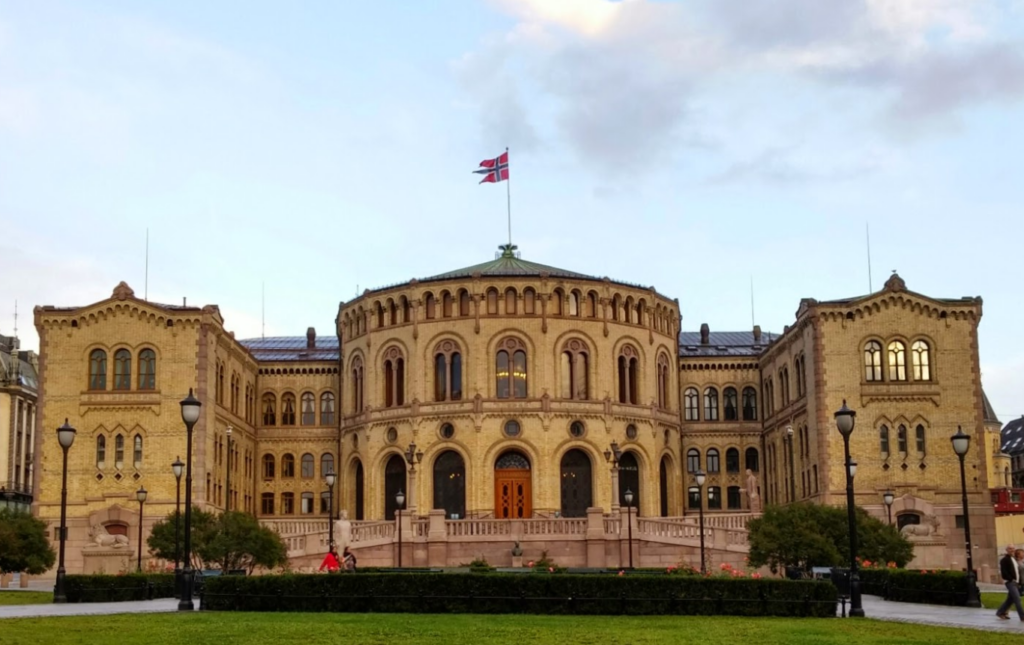
The timespan of this story implies that it could be a pretty long blog post. We have therefore structured the story into chapters with a number of bolker (in plural, singular bolk, OldNorse (ON) bǫlkr, meaning partition). There will be a number of subsequent chapters/posts bringing the story up to the democratic Norway of today, so stay tuned!
ABBREVIATIONS
- ON = Old Norse
- BCE = Before Commom Era (instead of BC)
- CE = Common Era (instead of AD)
READING ADVICE
The blog post includes fact boxes with information we think is interesting and illustrative, but may break the flow of the main text. Reading the story while skipping the textboxes will therefore work just fine.
To make the fact boxes and pictures more readable, clicking on them will enlarge them to fill the screen. Use the back arrow in your browser to return to the blog post.
Prologue
When the story about the history of Norwegian democracy is written, it is important to note that the countries in Northern Europe were never occupied by the empires that emerge, and subsequently fall, in Europe, first and foremost the Roman Empire (510 BCE –476 CE). In spite of significant contact between Scandinavians and the people and rulers of central and southern Europe, as far south as Istanbul and the Black Sea during the Viking Age, they were never significantly influenced by how these areas were governed.
On the contrary, Scandinavians could develop their own way of organizing their societies – and develop their own system of justice and laws. With roots dating back centuries Before Common Era, then as oral tradition maintained by lawspeakers. Norway’s oldest known laws of a larger format are the regional laws from the Middle Ages, the very oldest codified during the late 11th or early 12th century.
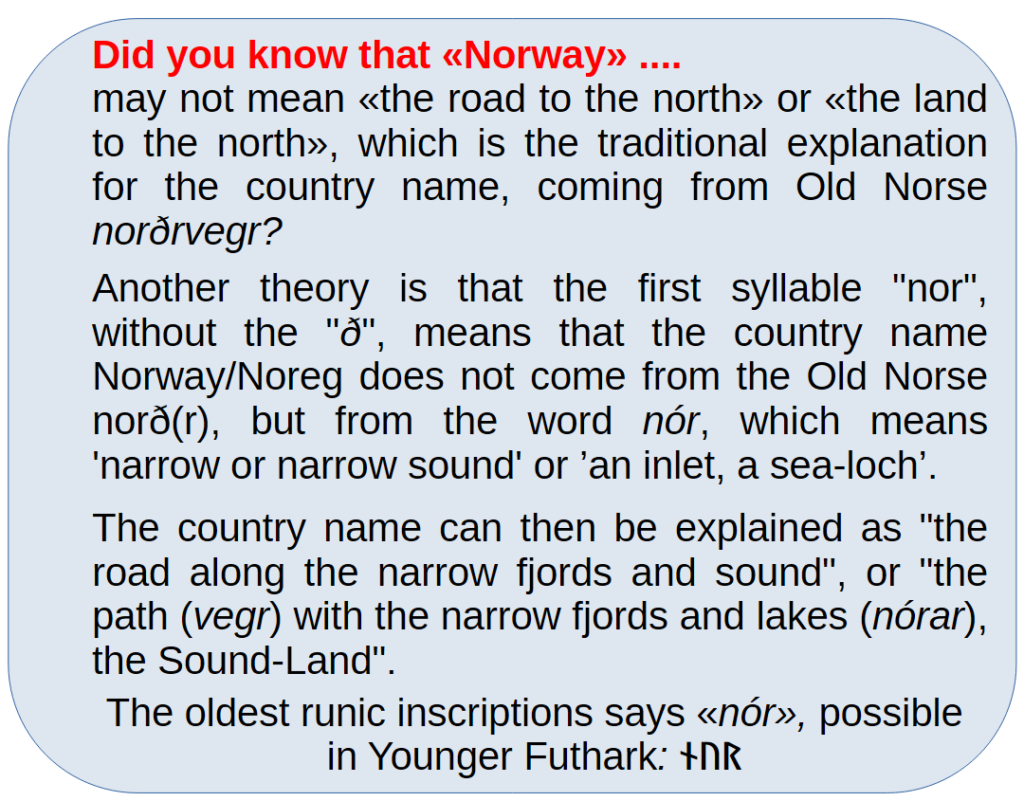
Law was clearly important, manifested in the fact that lǫg, the Old Norse word for ‘law’, is part of the name of the region Trøndelag (ON Þrǿndalǫg), i.e. the Trøndelag people’s legal area.
We will let the following old legal proverb be the guideline for our description of the journey towards today’s Norwegian democracy:

Let us start from the very beginning ..
Chapter One: From scattered tribes to a unified Norway
Bolk 1: The origin of Norwegians
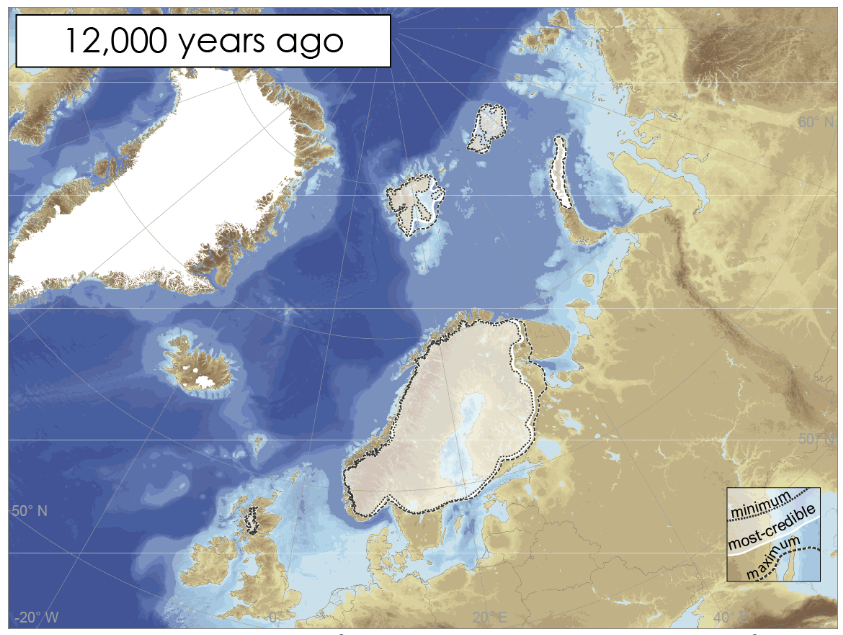
Our story starts with what-is-to-be Norway around 12,000 years ago, when a vast area in the North, including Norway, was covered by a 2–3,000 meter thick layer of ice (glacier cap). [Source]
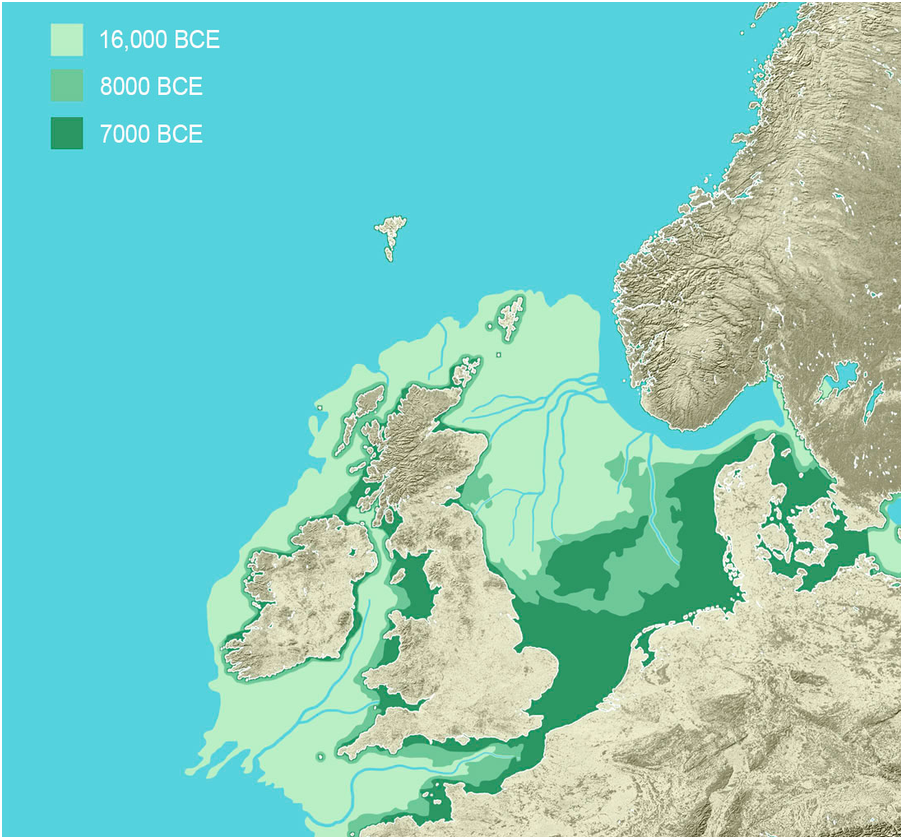
While the icecap slowly disappeared from the coastline, which at that times was quite different from now (see map, where the green areas mark land above sea level), groups of hunters and gatheres from southwest Europe followed the reindeer to Scandinavia and lived their lives on the ice-free coastline of the North Sea and the Atlantic.
The map above shows that a great part of the present North Sea was land—historians call it North Sea Land or Doggerland. For instance, about 10,000 years ago, it was possible to walk from Denmark to Sweden. When the ice sheet melted, the sea level rose and Doggerland disappeared. [Source]
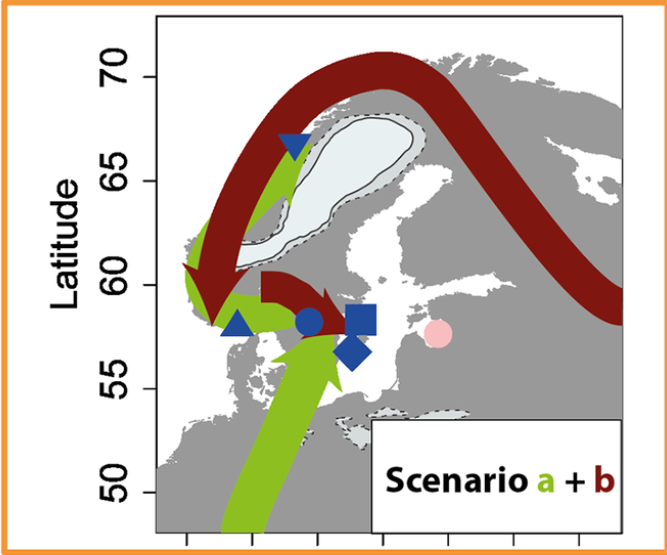
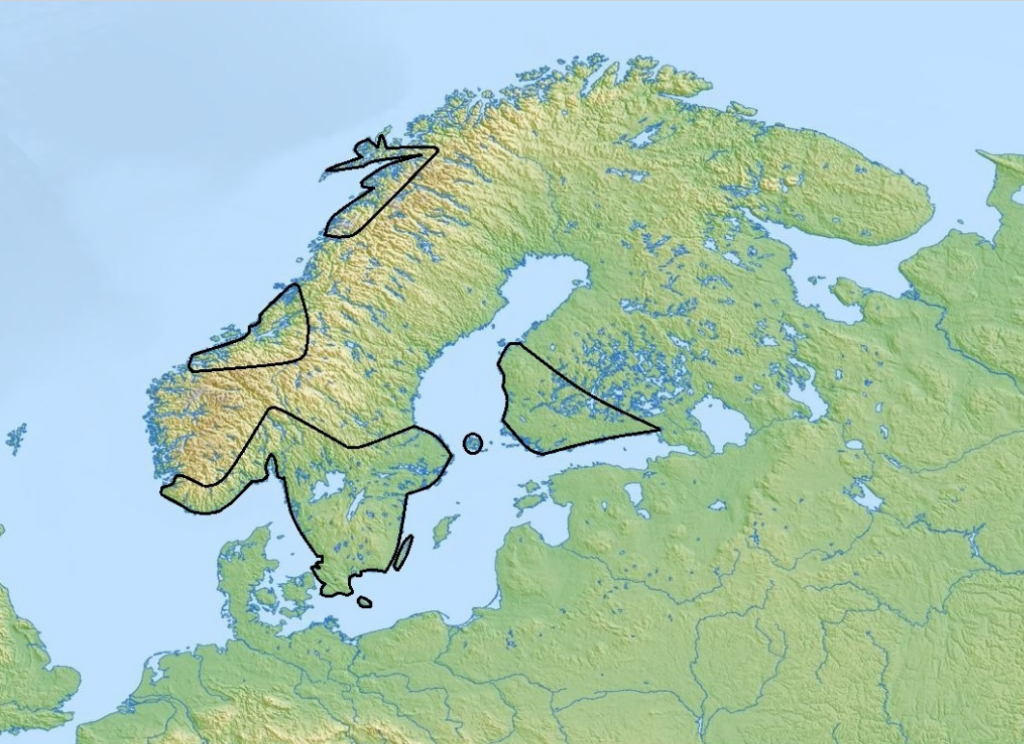
Something similar seems to have happened some 1,000 years later when another group of people from Russia moved north of the icecap and southward along the Atlantic coast, from about 9000 BCE and inhabited the northern areas of Fennoskandia. [Source]
The map above shows a combination of routes from two scenarios most consistent with genetic data and stone tools. [Source]
What happened to these groups is unclear, because genetic evidence of archeological findings is pointing towards multiple migrations during the millennia. The “classical” view that the hunter/gather-peoples evolved into farmers, and later to vikings and the modern human is, based on today’s genetic technology, been proven to be wrong.
In the southern regions of Norway, towards the end of the 3rd millennium BCE, nomads originally from the Black Sea/Caspian Sea/Caucasus region, migrated from Europe to Norway bringing with them domesticated horses, agriculture, cattle and wheel technology. They are called Battle Axe culture, or Boat Axe culture. There are archeological traces of them as far north as Lofoten, and their genes are highly present in modern Norwegians.
In the far north, a different and less understood population history unfolded. Genetic and archaeological research points to multiple waves of migration into the region over thousands of years, including movements linked to areas east of Scandinavia. These groups are understood to be ancestral to today’s Sámi people, whose distinct society and semi-nomadic traditions developed over the following centuries. The Kven, a separate group with roots in later Finnish migration to northern Norway, adds a further layer to this history. The Sámi and Kven have different ethnic and linguistic background from the Norse, their own culture, belief system, and societal organization. Their history deserves their own telling. However, we will touch upon the Norwegian Sami population with some glimpses during our journey towards today’s Norwegian democracy.
After we now have set the stage, we arrive to one of the most dramatic upheavals in European history – and an important background for our story of the birth of Norwegian democracy:
The migration of Germanic Tribes and the fall of the Roman Empire
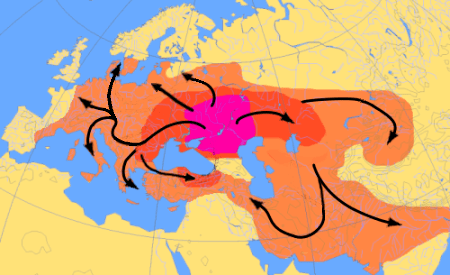
The map (left) shows a schematic picture of the Indo-European migrations from about 6,000 to 3,000 years ago according to the Kurgan hypothesis. The purple area corresponds to the presumed ancestral home, and the red to the area that may have been settled by Indo-European-speaking peoples until about 4,500 years ago; similarly for the orange area until about 3,000 years ago. [Source]
The Germanic Tribes were groups of people, speaking Indo-European languages, that occupied central Europe from as early as the 17th century BCE—before the establishment of the Roman Empire. From burial sites, archaeologists and historians believe that Germanic people before 1200 BCE inhabited the Danish peninsula (Jutland), southern Sweden and northern Germany. [Source]
The colored areas in the map below shows the extent of Germania, as the Romans called the area that was dominated by Germanic tribes. The Goths inhabited the map’s pink area, and by traditions they held that they originally had homeland in southern Sweden and Norway.
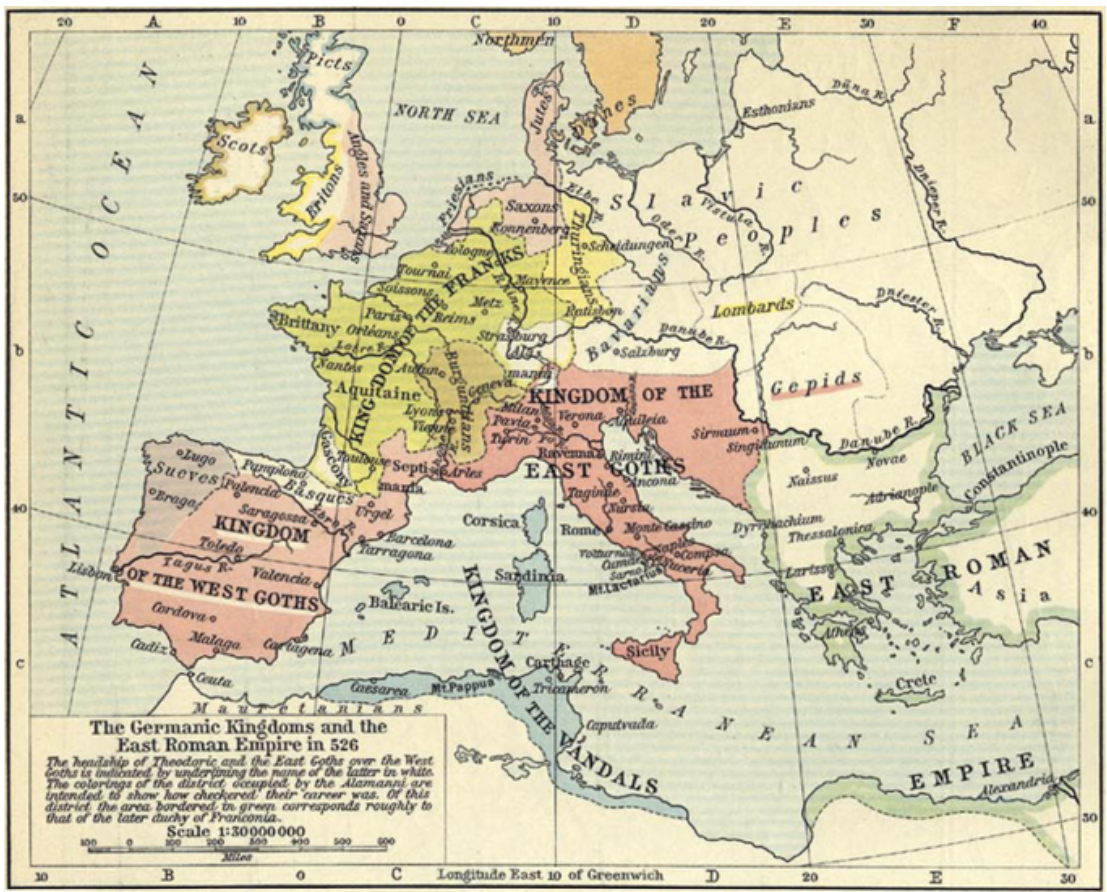
By the 2nd century BCE, Germanic tribes made their way into Italy and came in contact with the Romans. In the centuries that follow, it seems that the tribes and the Romans lived in some sort of love-hate relationship: They fought against each other over territories and agricultural resources, but at the same time the Romans benefited from trade, and not least, the “barbarians” as fearless warriors, their willingness to fight to the death—by the late fourth century CE, the Germanic tribes represented a large portion of the Roman military, which of course was risky for the Romans: In 9 CE, Arminius, chieftain of a Germanic tribe, who was trained as a Roman soldier, led rebellion against the Romans in the famous battle in Teutoburg Forest and defeated three Roman divisions.
This marked the limit of Roman expansion into Germania, and was the start of the end of the (Western) Roman Empire. In the centuries to come, the descendants of the Germanic tribes took over more and more of Roman territory, culminating with the Germanic leader Flavious Odoacer entering the city of Rome unopposed in 476 CE. [Source]
Important factors that created the Nordic societies
It follows from the text and maps above that the Norwegians of today are the result of a series of migrations of people over the millennia as the ice sheet retreated and freed up land. The first people in Norway were tribes of hunters and gatherers, constantly on the move in search of food. It was probably the abundant fishing and hunting of seabirds and seals that attracted them to the new land. It is also possible that the first people followed herds of reindeer that migrated here.
The decline and fall of the Roman Empire left a Europe in upheaval, but the remaining Germanic tribes in the regions of Norway and Sweden were marginally affected by that. Instead, they had a relative stable period that allowed them to develop their society politically and in trade—supplying goods such as amber, furs, and slaves in exchange for Roman wine, weapons, and luxury items.
It was the descendants of these northern Germanic tribes that eventually became the Norse raiders and traders known as the Vikings – and later the nations of Iceland, Norway, Sweden, and Denmark.
And lastly, but very importantly: The Germanic tribes brought with them a language (pro-Germanic), and the seeds of a form of government (the Thing system)—which we will hear more about later in this blog series.
Bolk 2: The emergence of farming, the prerequisite for power
From hunting and gathering to agricultural settlements
Traces of people have been found in Norwegian mountain areas from around 8000 BC. But it was still a long time before the “Norwegians” became settled and began to cultivate the land—also inland—as the ice melted.
The diet of the hunter-gatherers was seafood, game animals, and what was edible from the wild. The first agricultural settlements appeared around the Oslofjord between 5000 BC and 4000 BC, and between 1500 BC and 500 BC such settlements spread up to Trøndelag, while further north hunting and fishing remained the primary way of life.
This period also saw the arrival of the Corded Ware culture (an offspring of the Battle Axe culture, see above) which brought new weapons, tools and an Indo-European dialect, from which later the Norwegian language developed.
Between 2900 and 2500 BC, a revolution happened when domesticated grain varieties and animals spread from the Fertile Crescent (area in the Middle East) in a journey that lasted about 6,000 years. Oats, barley, pigs, cattle, sheep and goats became common and spread as far north as Alta in Norway. It seems very likely that the introduction of farming happened while fishing and hunting still was going on. What evolved in western Norway bridged the gatherer economy with the beginning of the agricultural way of life. Many of these farmers surely were both fishermen as well as farmers (as is not uncommon even today).
And then came the “garðr”
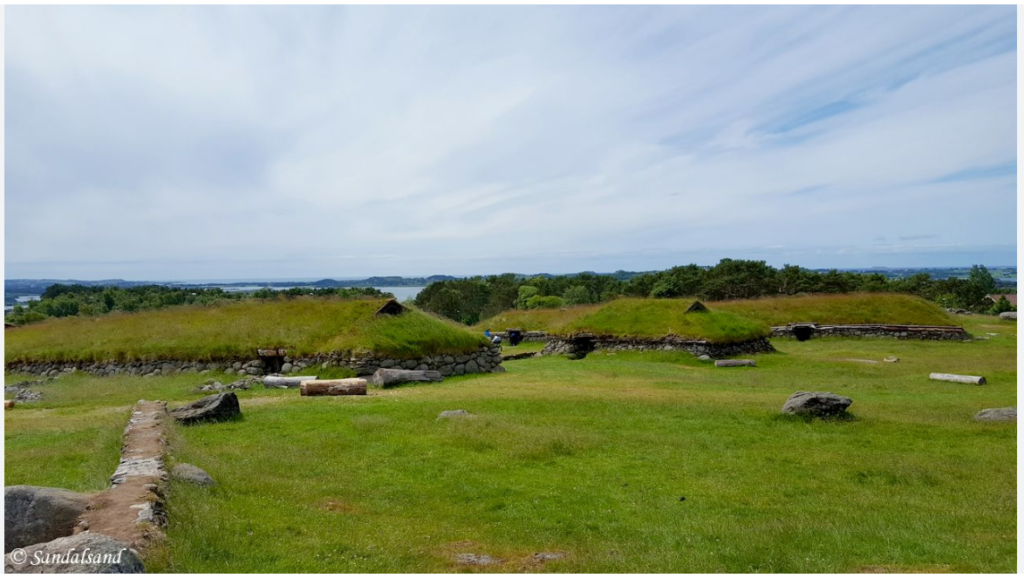
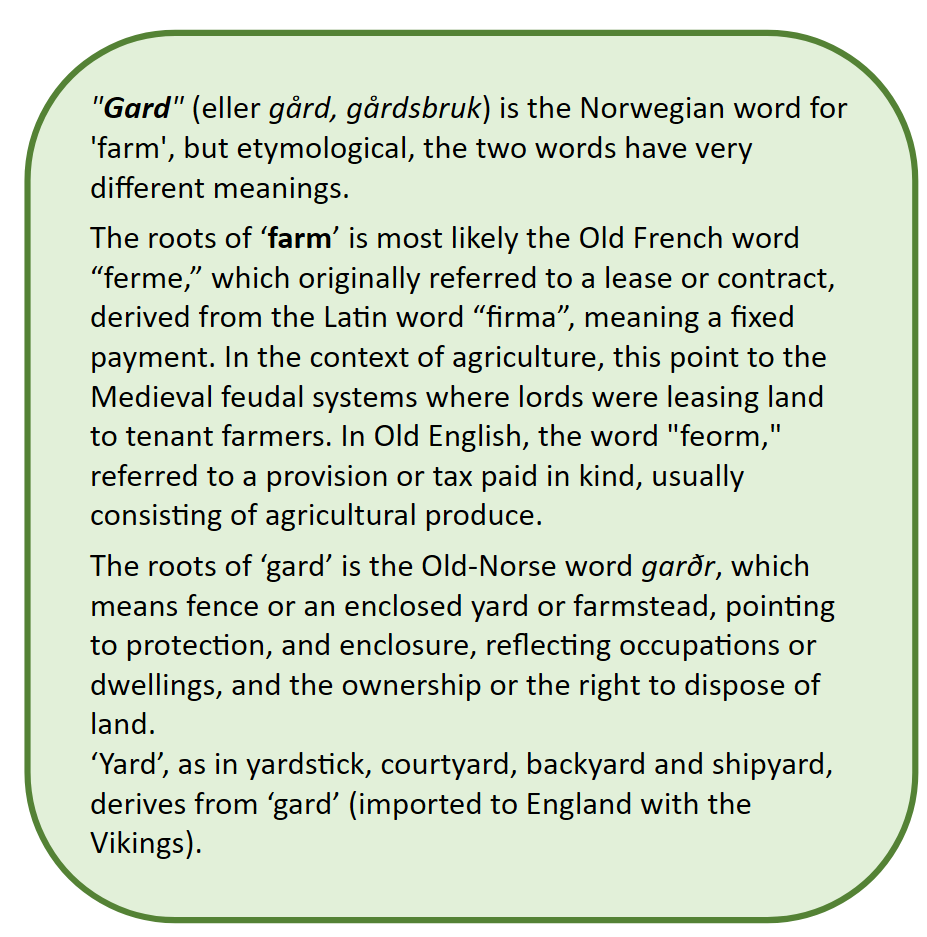
The gard (ON garðr, the Norwegian word for farm) is fundamental to explaining the emergence of systems of law and justice in Norway. The gard consist of several buildings around a tún, i.e. an open area that functions as a workplace, private zone and social meeting place.
There are traces of agricultural settlements in the North around 4000 BCE, but the oldest farms were founded maybe around 3000 BCE, up to 2000 BCE. These farms, called primordial farms (urgarðr), were the oldest farms in an area, cleared on the best spot, on the most central place in the landscape.
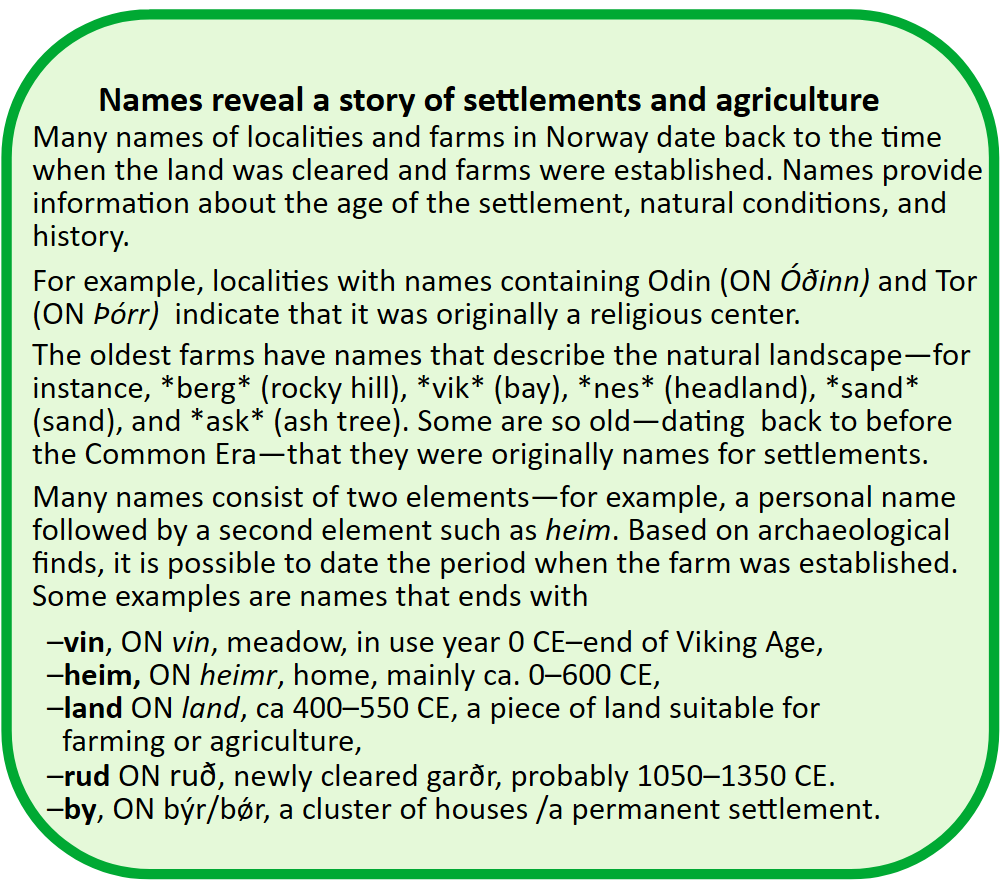
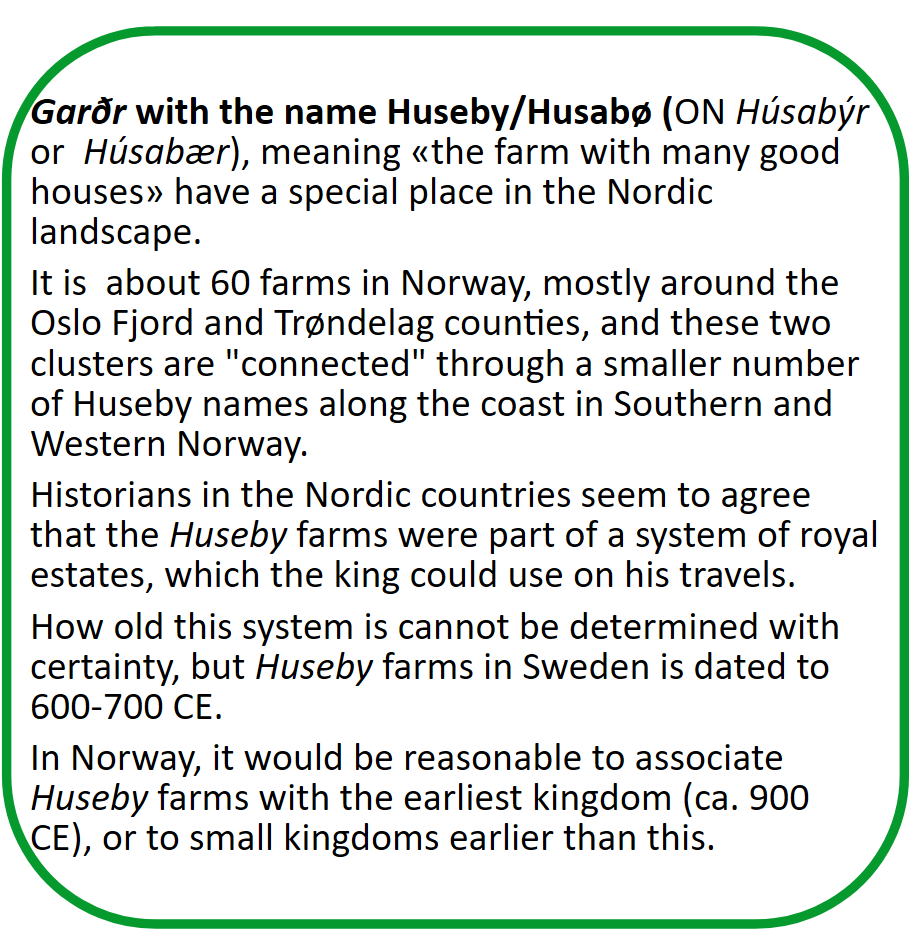
Over time, the number of farms increased, and we can follow this development by the farm’s name (see textbox above). With time, borders between groups of farms were established. However, we must keep in mind that the population at the time of the urgarðer were some 10,000 people, scattered around in the Norwegian landscape, which is characterized by high, steep mountains, narrow valleys, and long fjords that cut into the land. This topography plays a role in the development of the society, as we will see later on.
A consequence of this is, especially compared with other countries, the remarkable characteristic that freehold ownership of single farms was widespread in Norway. The vast majority of people in the Middle Ages (500–1500) lived on a farm, and the owner was called bóndi (via ON búandi today’s bonde), which means in Norwegian boende, permanent resident, that is, a person who owns land and has a house there. One main source for this conclusion is the stability of names of farms over time, and that the endings of the names can be dated.
Peasantry as a emerging political factor
The Norwegian bóndi was (and still is) landowner and free—today’s equivalent of self-employed, one may say.
Some of the farms (ON garðar), especially those on fertile soil, could eventually grow into large farms and maintain large households with servants – and slaves. Wealth came from fields and livestock, and in the Viking Age from raids abroad as well as generous pay for military service with Southern European rulers, and trade voyages. The sagas tell of groups of farmers with large farms that could mobilize armies who could go to war against kings.
The strong peasantry became a political factor, often in opposition to royal power, and as we shall see, those with large farms acted as both legislators and judiciary in assemblies that with time developed into Things.
A few words on trade, metals, and font symbols
Surprisingly, the people in the North had extensive contact with the European continent. Around 2400 BCE, boats made of planks were invented, which was one factor making trade possible – and bronze (an alloy of copper and most often tin) entered the region from abroad around 1500 BCE. Earlier, copper was probably mined and used locally, but the first metal that was useful for making axes and swords, was imported bronze. This essential metal was traded for furs, leather, wool, textiles, flint, soapstone, timber and various handicrafted products.
Then, around 500 BCE, iron was introduced in the North, most likely first as imported goods, but along came also the knowledge of how to extract iron from bog ore – and the Bronze Age was transformed into the Iron Age, from ca. 550 CE through ca. 1050 in the North.
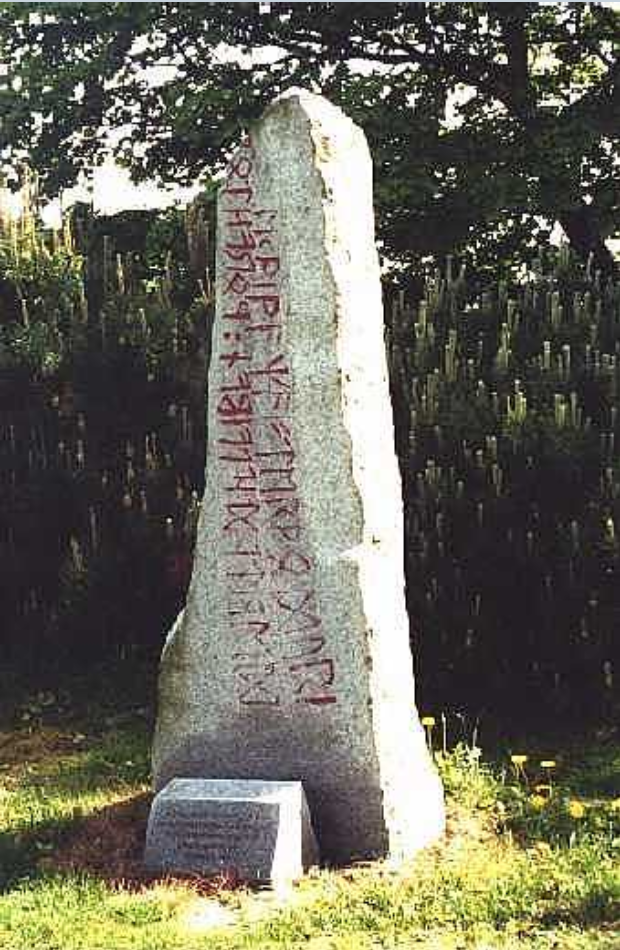
Even before the Iron Age, written characters in the form of runes had entered the Nordic region from south, as demonstrated on Tunesteinen from ca. 400 CE. [Source]
During the Iron Age, the rune system was developed to 24 characters and later simplified to a 16 character system, the futharks. [Source]. We will have more to say about the enigmatic history of runic writing later in this blog series.
Bolk 3: The formation of Norway into a kingdom
Tools and swords made of iron were prerequisites for the Viking Age. With axes, chisels, and gimlets (a small tool used for making holes in wood) of iron, it became possible to build sleek, clinker-built ships using overlapping oak planks — the famous Viking ships. Iron also had a revolutionary effect on agriculture, as the metal was used for making plows and other farming tools.
Increased contact with foreign countries—including the Roman Empire—along with the development of the ancient Norse into a Nordic language and more common use of written language (the futhark), allowed settlements to grow. But this also increased the differences between rich and poor, evident from burial sites that tell a story of a rich material culture, large farms and chieftains.
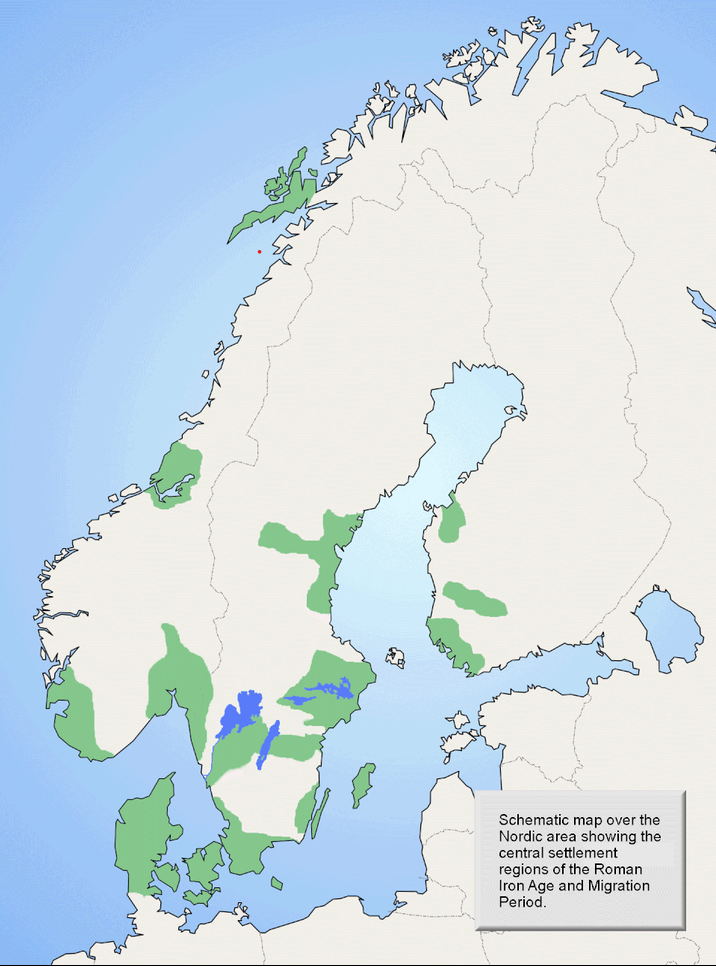
As we have seen above, in the period 400 BCE to 500 CE, Germanic tribes moved north from Central Europe – the Migration Period. This happened at the time the Roman Empire disintegrated. The map shows that at least 13 small “kingdoms” existed during the Early Iron Age period (ca. 0-600 CE).
An important point has to be repeated here: Contrary to Southern Europe, the northern part including Fennoskandia never was a part of the Roman Empire – Roman expansion northward on the mainland of Europe was stopped south of Denmark.
From many petty kings to one kingdom
The maps below (left pair) show that around 500 AD, the not-yet-Norway is ruled by a numerous chieftains, or petty kings. During the following period of about 200 years, the kingdom landscape became more consolidated, making the job for Harald Fairhair (Haraldr Haraldr Hárfagri; ca. 850–ca. 932) easier, but not without struggle with rival petty kings.The famous Battle of Hafrsfjord, traditionally dated 872 CE, is defined as the point in Norwegian history where a unified kingdom became the Kingdom of Norway, and King Harald I became king. The battle location is marked on the map with the name Rogaland. However, the unification of the Norwegian kingdom was not completed with the battle of Hafrsfjord alone.
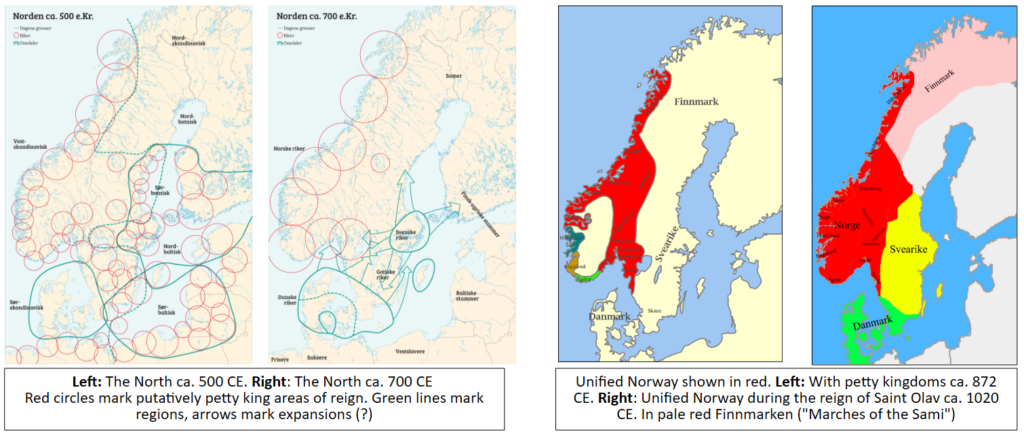
The maps above (right pair) show petty kingdoms of ca. 872 CE (the unified kingdom shown in red) just before the defining Battle of Hafrsfjord, and the unified Norway during the reign of Saint Olav ca. 1020 CE. Shown in pale red is Finnmarken (“Marches of the Sami“). Sámi communities during this period paid tribute to multiple crowns, including Norway, Sweden, Finland and Novgorod/Russia, in a system of shared taxation.
Wrapping up so far
From the time the first people arrived in Scandinavia and Norway, it took around 10,000 years for Norway to become a nation, and for the Kingdom of Norway to be established. When this happened, a strong peasantry had already been built up, iron tools and weapons were forged, ships we call Viking ships were built, trade routes were established – and a certain form of law and justice existed.
In Scandinavia, the period of roughly 550–750 CE, preceded and, in many ways, set the stage for the next era: The (in)famous Viking Age (ca. 800–ca. 1100 CE) and the development of the legal system of the Things.
These are the topics of the next blog post, Chapter 2 in this series: Viking Age, the Political System and the Christianization of Norway, leading up to King Magnus Lawmender—and the first nationwise law.